What is a barefoot shoe (and what isn't)
'Barefoot' has become a marketing label. Here is what it really means, and how to check it with your own hands in a minute.
A definition experts agree on
In 2015 a panel of 42 experts from 11 countries agreed on a definition of minimalist footwear: shoes that interfere as little as possible with how the foot moves, thanks to high flexibility, low drop, low weight and low stack height, and with no motion-control or stability devices. They also built a 0 to 100 index to score how minimalist a shoe is (Esculier et al., 2015).
'Barefoot' is the commercial name for the most extreme version of that idea: a shoe that protects you from the ground but lets your foot work almost as if it were bare.
The five signs
- Zero drop: heel and toes sit at the same height. No hidden heel.
- Thin sole: a few millimetres, enough to protect you while you still feel the ground.
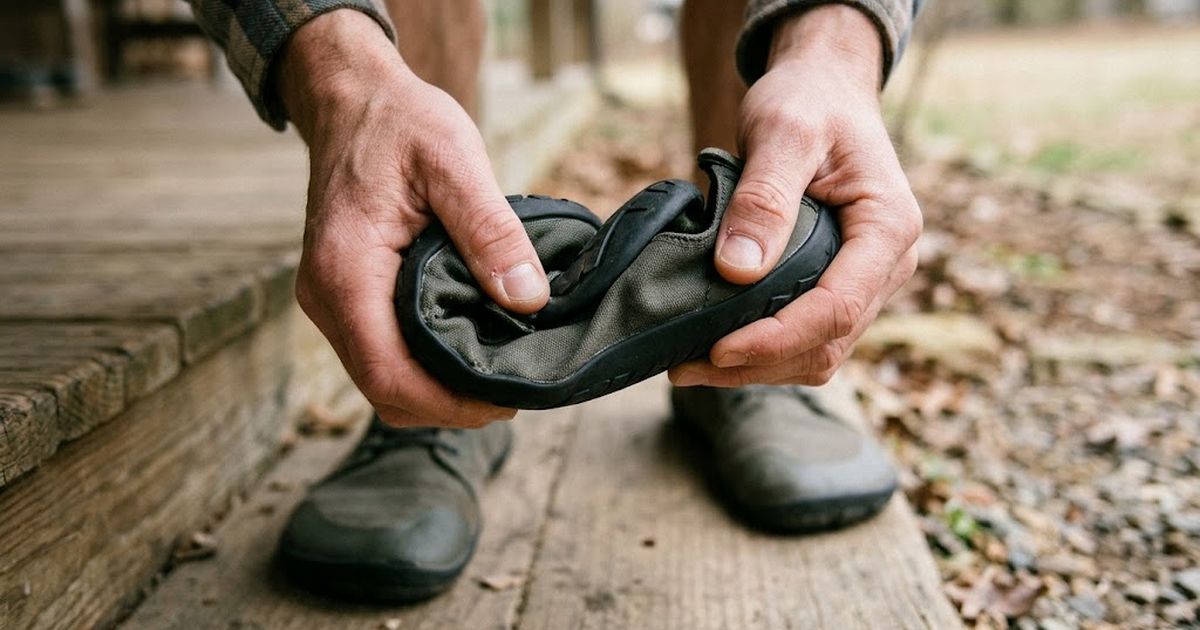
- Flexible both ways: it folds in half and twists like a towel.
- Foot-shaped toe box: wide at the toes, not pointed, so they can spread as you step.
- Light, with no 'technologies': no arch support, no rigid inserts, no stability wedges.
The one-minute test
Pick up the shoe and do this: fold it so toe meets heel; twist it; lay the insole next to your bare foot and see whether your toes fit without overlapping the edge. If it fails two of the three, it isn't barefoot, whatever the box says.
What isn't barefoot
- A flat shoe that is narrow and pointed: the drop is zero, but the toes are squeezed.
- A thin sole that is stiff: it won't let the foot bend as you walk.
- A foam-packed shoe sold as 'minimalist': the label doesn't change what is under your foot.
Where PAS DE TRES fits
PAS DE TRES is a canvas sneaker with a wide toe box, a thin flexible sole and zero drop. We will publish the exact sole measurements and size chart with the final sample, before pre-orders open. Meanwhile, take a look at the six Generation 01 candidates.
Comments
We review every comment before publishing it. Your email is never published.